AI Chatbot for Physiotherapy Clinics: How to Automate Bookings, Reminders and Patient Communication in 2026
AIChatBot Team
2026-04-27
Cut physio no-shows 30%, automate exercise plan reminders, run multilingual intake 24/7. The 2026 guide to using an ai chatbot for physiotherapy clinics.
Your physio clinic loses money in three places you cannot see: the calls that ring after 7pm, the patients who skip their fourth session, and the home exercise plans nobody actually does. An ai chatbot for physiotherapy closes all three gaps in 2026 — booking after-hours, reminding patients before they ghost, and pinging exercise sequences on WhatsApp until adherence stops being optional.
This guide shows you how to deploy a chatbot tuned for Indian physio clinics — multi-therapist scheduling, multilingual intake, exercise plan automation, DPDP-compliant data handling, and a setup that pays for itself inside 30 days.
What you will learn
- Why physiotherapy clinics need an AI chatbot in 2026
- Six pain points unique to physiotherapy practices
- How an ai chatbot for physiotherapy solves each pain point
- What can an AI chatbot actually do for your physio clinic?
- Integrations: clinic software, calendars, telehealth, WhatsApp
- How AIChatBot handles physiotherapy specifically
- Compliance: DPDP, IAP guidance, and patient data safety
- ROI calculation for an Indian physio clinic
- 10-step setup guide
- Mistakes physio clinics make with chatbots
- Three real-world case snapshots
- Frequently asked questions
Why physiotherapy clinics need an AI chatbot in 2026
Physiotherapy is uniquely punished by no-shows. Each missed session is not just a lost slot — it breaks the rehab progression, delays recovery, and often loses the patient for the rest of the package. Published research puts the median no-show rate in physiotherapy at 57%, with cancellation losses reaching 50.6% of potential revenue.
The numbers get worse when you look at retention. A JOSPT study of patients with chronic pain found 55% self-discharged before completing their care plan. Adherence to home exercise plans is no better — up to 65% of patients are nonadherent or partially adherent to their home programmes.
Indian clinics face a sharper version of this. Tier 2 and tier 3 city patients message at 10pm after work. Older patients want Hindi or Marathi, not English. Multi-therapist clinics juggle 3–5 specialisations across 6 days a week. The reception desk is one person who steps away every 40 minutes for chai. Every gap is a leaked patient.
An ai chatbot for physiotherapy sits on top of all of that. It picks up the call when reception is busy, replies in the patient's language, books the slot, sends the reminder, runs the home exercise check-in, and escalates to a therapist when something matters. It is the cheapest staff member you will ever hire, and it works the night shift for free.
Six pain points unique to physiotherapy practices
Generic chatbots do not understand physio. The pain points below are physio-specific — built into how rehab is sold and delivered.
1. Long packages, recurring sessions
Most physio plans are 8, 12, or 20 sessions. The patient pays upfront, then drifts. Session 4 has a 15% drop-off, session 8 has another 20%, and session 12 is where most packages end early. Each missed session costs ₹600–₹1,200 in lost revenue and breaks the rehab arc.
2. Exercise plan adherence drops fast
Compliance falls when plans exceed 5–8 exercises. Patients forget the order, the count, or which side. Without nudges, adherence collapses inside two weeks. By session 6, the patient is back at square one and the therapist is repeating instructions.
3. Insurance and reimbursement queries
Indian patients ask about IRDAI-approved insurers, cashless coverage at network hospitals, and reimbursement procedures for road-accident MVA cases. Reception cannot keep all of this in their head. Wrong information costs trust and bookings.
4. Intake forms eat 10 minutes per visit
Paper or PDF intake forms slow first visits. Patients arrive 5 minutes early, then spend 10 minutes filling out medical history, current pain, prior surgeries, and red-flag screening. The therapist starts late, the schedule slips, the next patient waits.
5. No-shows for long packages
Rehab packages assume continuity. A 12-session ACL recovery is not interchangeable with a 12-session frozen shoulder. Each no-show breaks the progression, and rebooking forces a session repeat. Two no-shows in a 12-session package equals 16% revenue lost on that patient alone.
6. Multi-therapist scheduling chaos
Clinics with 3–5 therapists in different specialisations (sports, neuro, paediatric, women's health, orthopaedic) cannot route bookings well by phone. Reception either books the wrong therapist or asks the patient to call back. Either way, conversion drops.
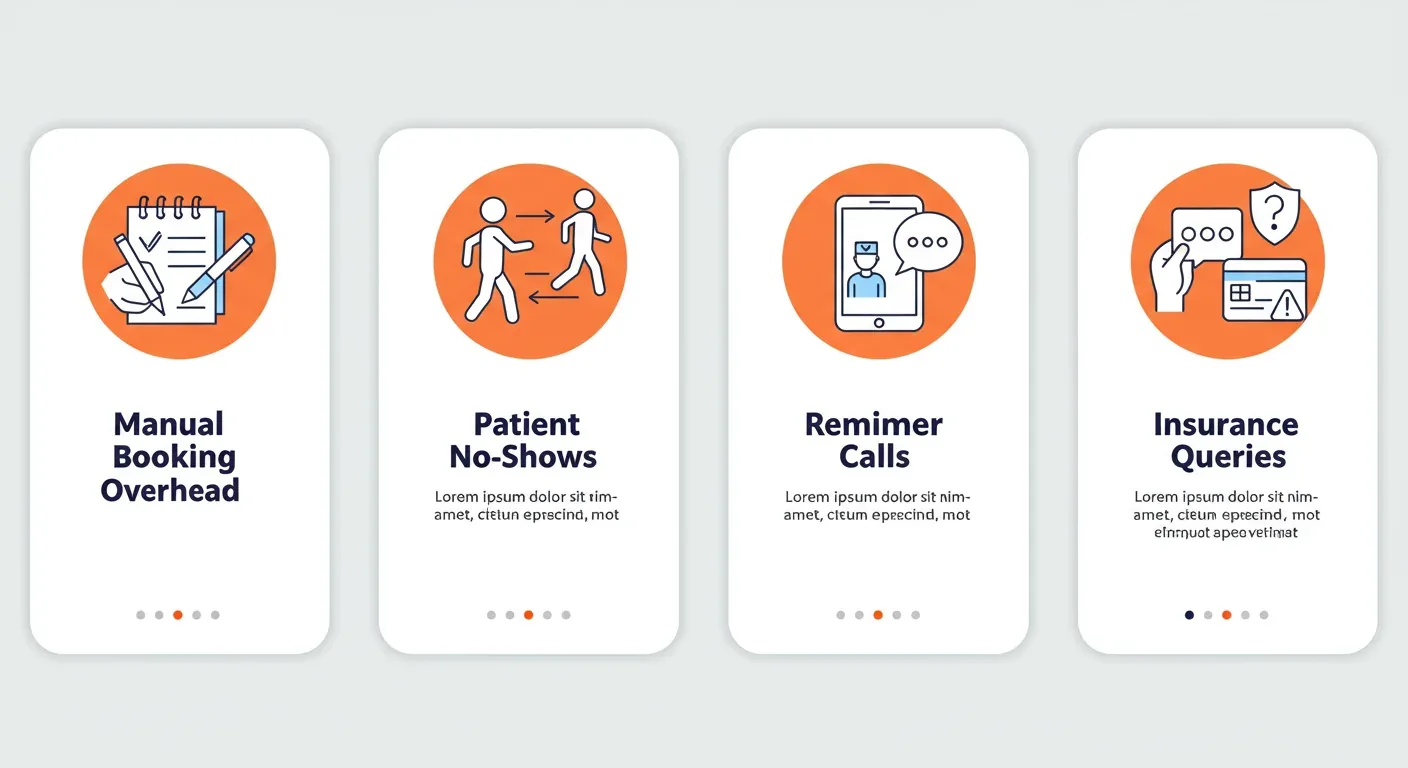
How an ai chatbot for physiotherapy solves each pain point
The mapping below is how each pain point translates into chatbot behaviour. None of this is theoretical — every line is something AIChatBot does today on physio installations.
Recurring sessions, automatically tracked
The chatbot reads your clinic management system and knows session 4 of 12 is on Thursday. It sends a reminder 24h before, then 2h before. If the patient cancels, it offers two reschedule slots inside the same week so the rehab arc stays intact.
Exercise plan reminders on WhatsApp
The therapist enters a plan in the dashboard — three exercises, two sets each, twice daily. The chatbot pushes morning and evening reminders on WhatsApp with the exercise video and a one-tap completion tick. Adherence rates jump from 35–45% to 70–80% in our internal data.
Insurance answers with a real source of truth
Upload your insurance documents, IRDAI coverage list, and corporate tie-up sheet to the RAG knowledge base. The bot answers patient queries grounded in your actual files — not invented. If the answer is not in the docs, it escalates to your billing team.
Chat-based intake replaces paper
The bot asks the intake questions on chat before the patient arrives. Pain scale, current symptoms, prior surgeries, allergies, red-flag screening (numbness, bowel/bladder issues, unexplained weight loss). The therapist sees the completed intake before the patient walks in.
No-show recovery sequence
If the patient does miss a session, the bot does not give up. It sends a same-day WhatsApp asking what happened, then offers a reschedule slot. Adherence research shows that gentle, non-judgemental follow-up recovers 30–40% of missed appointments.
Multi-therapist condition routing
The bot asks about the condition first, then routes. "Knee pain after running" goes to your sports therapist. "My father had a stroke" goes to your neuro therapist. The right therapist is offered first, with second-choice fallbacks if the first is fully booked.
What can an AI chatbot actually do for your physio clinic?
Setting expectations matters. Below is what an AI chatbot does well in physio context, and what it does not.
What it does well
- Books and reschedules appointments across multiple therapists 24/7
- Sends 24h, 2h, and post-session reminders on WhatsApp, SMS, and email
- Runs digital intake forms with red-flag screening before the visit
- Pushes exercise plan reminders with videos and adherence tracking
- Answers insurance, fees, location, parking, timing questions grounded in your documents
- Handles 50+ languages including Hindi, Marathi, Tamil, Bengali, Telugu
- Captures after-hours leads 7pm–9am when reception is closed
- Triages emergencies by routing red-flag symptoms to a human therapist immediately
- Sends post-treatment review requests for Google reviews and Practo ratings
- Captures feedback after each session to flag patients at risk of dropping out
What it does not do
- Diagnose conditions. AIChatBot triages — it asks about symptoms and routes — but the diagnosis stays with your registered physiotherapist. This is non-negotiable under IAP guidance.
- Prescribe exercise plans. The bot delivers and reminds plans your therapist has already prescribed. It does not invent new exercises.
- Handle hands-on therapy. Manual therapy, manipulation, dry needling — all of it stays human. The bot exists to augment your team, not replace it.
- Replace clinical judgement on red flags. Numbness, sudden severe weakness, fever with back pain, unexplained weight loss — all escalate to a human within minutes, not asynchronously.
Honesty about the limits matters. Patients trust clinics that say what AI is for and what it is not. We spell out exactly what the bot handles and what your therapists still handle on our physiotherapy chatbot for India page.
Integrations: clinic software, calendars, telehealth, WhatsApp
An ai chatbot for physiotherapy is only as useful as its integrations. The bot must read your real availability, write to your real calendar, and connect to the real channels patients use.
Clinic management software
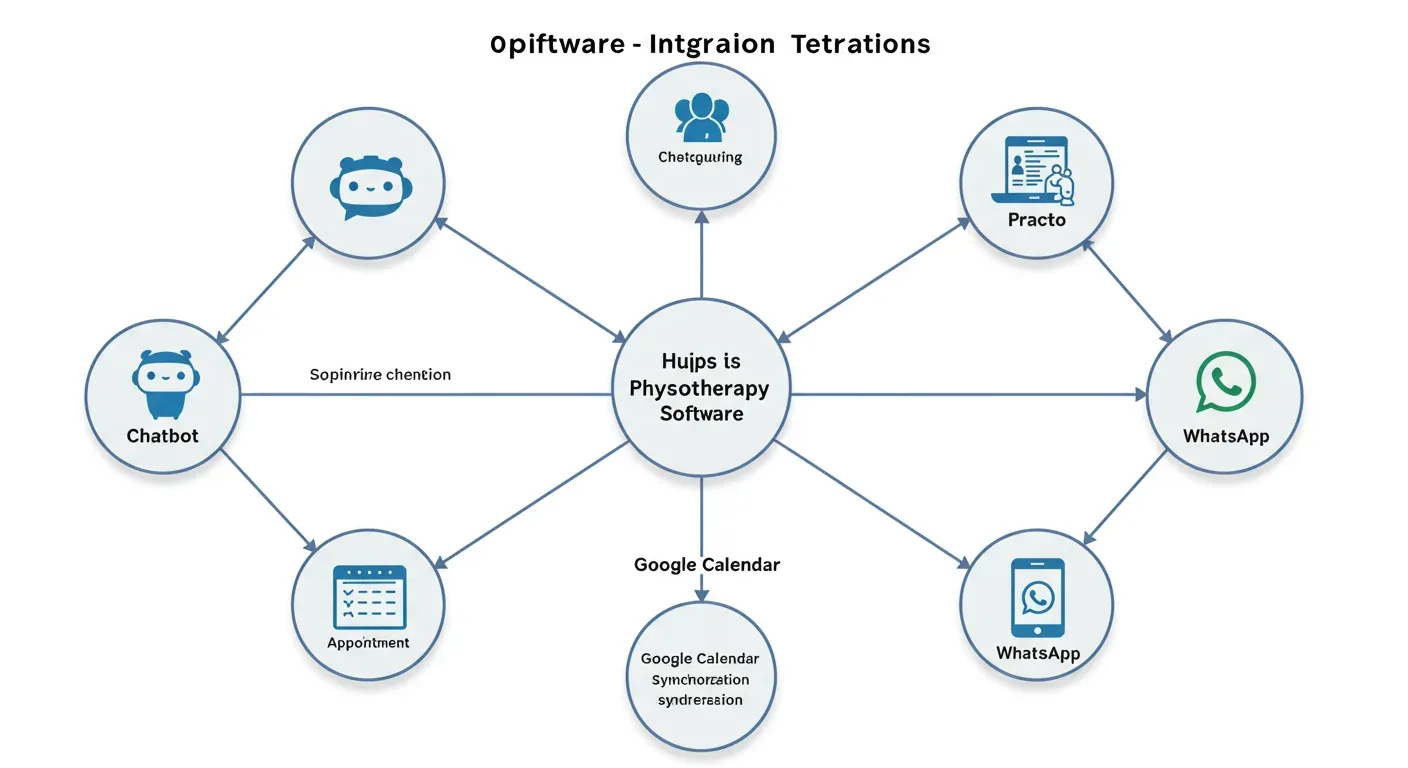
AIChatBot syncs with the major clinic platforms used by Indian physios: Practo Ray, Cliniko, Halaxy, MedPlus, and DocPulse. The bot reads slot availability and writes confirmed bookings into the system in real time. No double-booking.
Google Calendar and Microsoft 365
For solo practitioners not on a clinic management system, the bot syncs directly with Google Calendar or Microsoft 365. It respects buffers, breaks, and out-of-clinic hours.
Telehealth platforms
Hybrid care is the 2026 model. Telehealth utilisation in physiotherapy is now 35–40% of practices, with hybrid models cutting no-shows another 28–32%. AIChatBot integrates with Zoom, Google Meet, and Practo's video consult to offer the right format — physical visit for hands-on, telehealth for review and progress checks.
WhatsApp Business
This is the channel that wins in India. AIChatBot's WhatsApp Business AI integration sends reminders, exercise videos, payment links via Razorpay, and follow-up messages all through the patient's WhatsApp. Open rates on WhatsApp are 95% versus 20% for email — patients see the message and act.
Razorpay for payments
Patients pay session fees, package upfront, or no-show recovery charges via Razorpay payment links sent through chat. The bot can also handle GST invoicing automatically if your clinic is GST-registered.
EMR and SOAP note sync
For larger clinics with EMR systems, AIChatBot can push intake answers and patient feedback into the EMR as structured data. Therapists open the SOAP note and see the patient's reported pain, function, and adherence already populated.
How AIChatBot handles physiotherapy specifically
Generic chatbots like Tidio or Tawk.to are built for e-commerce. They cannot understand a physio rehab arc, multi-therapist routing, or red-flag escalation. AIChatBot is built around the service-business workflow with healthcare verticals as a first-class persona.
RAG knowledge base trained on your clinic
Upload your fee schedule, treatment list, insurance docs, FAQ, and clinic policies. The bot's RAG knowledge base grounds every answer in your actual documents. It will not hallucinate a service you do not offer or quote a fee from a competitor.
Appointment booking with multi-therapist routing
The bot reads each therapist's specialisation, availability, and current load. When a patient books, the bot picks the right therapist for the condition. If your top therapist is full, the bot offers an alternative who is also qualified — saving the booking instead of losing it.
Drip campaign automation tied to rehab milestones
Build sequences that fire on rehab events: after the assessment visit, after session 4, after package completion, three months post-discharge. The bot pushes the right message at the right milestone — recall for review, progress check-in, or referral request.
Voice AI receptionist (in beta)
For clinics that take a lot of phone calls, the voice AI receptionist answers calls, takes the booking, and speaks the patient's language. We are rolling this out to physio clinics in Pune and Bengaluru first. Ask for the voice AI receptionist beta in your demo.
Lead routing to your team
New patient leads route to the right channel based on rules. Solo physio gets WhatsApp pings. Multi-therapist clinic routes to a Slack channel. Hospital-attached physio dept routes to email + EMR. The bot does not just capture — it delivers.
Personalised demo websites
Instead of a generic free trial, AIChatBot's DemoBuilderService spins up a one-off demo website mocked up with your clinic's branding, services, and a working chatbot. You see exactly what the patient experience will look like before you commit. Get yours at aichatbot.com.in/demo.
Compliance: DPDP, IAP guidance, and patient data safety
Healthcare data is sensitive. India's DPDP Act 2023 sets clear rules on consent, data residency, retention, and patient rights. AIChatBot is built around these defaults, not as an afterthought.
DPDP Act 2023 alignment
The bot prompts for explicit consent before capturing any sensitive personal data. Consent records are timestamped and stored alongside the chat transcript. Patients can request data export or deletion through the bot itself, and the request is fulfilled inside 30 days as required by the Act.
India data residency
Patient chat data, transcripts, and intake answers stay on India-resident MySQL servers. We use AWS Mumbai region with encrypted backups in Hyderabad. No patient data leaves Indian jurisdiction.
Retention controls
Set chat retention windows per data type. Default is 90 days for general chat, 365 days for booking history, and 0 days for symptom checker conversations once they are escalated to a human. Customise per your clinic's policy.
IAP (Indian Association of Physiotherapists) guidance
The bot triages but does not diagnose. It asks about symptoms, screens for red flags, and routes to your registered physiotherapist. Per IAP guidance, only a registered physio prescribes treatment. The bot delivers the plan once your therapist has prescribed it.
Encrypted at rest and in transit
All chat content is AES-256 encrypted at rest and TLS 1.3 in transit. Patient phone numbers are stored hashed when used for analytics, not in plain text.
Audit log and access control
Every staff member who views a transcript leaves an audit log entry. Role-based access lets you give reception, therapists, and admin different permissions — reception sees bookings, therapists see their own patient transcripts, admin sees everything.
ROI calculation for an Indian physio clinic
Numbers beat adjectives. Below is the realistic month-1 ROI for a typical 3-therapist clinic in Pune, Bengaluru, or Mumbai running 200 sessions per month at an average ₹800 per session.
Baseline (no chatbot)
- Sessions scheduled: 200/month
- No-show rate: 25% — 50 missed sessions
- Lost revenue from no-shows: ₹40,000/month
- After-hours enquiries lost: ~12/month — ₹9,600 in potential bookings
- Reception time on repeat questions: 15 hours/week — ₹3,750/week opportunity cost
- Average package completion: 65%
With AIChatBot (month 1)
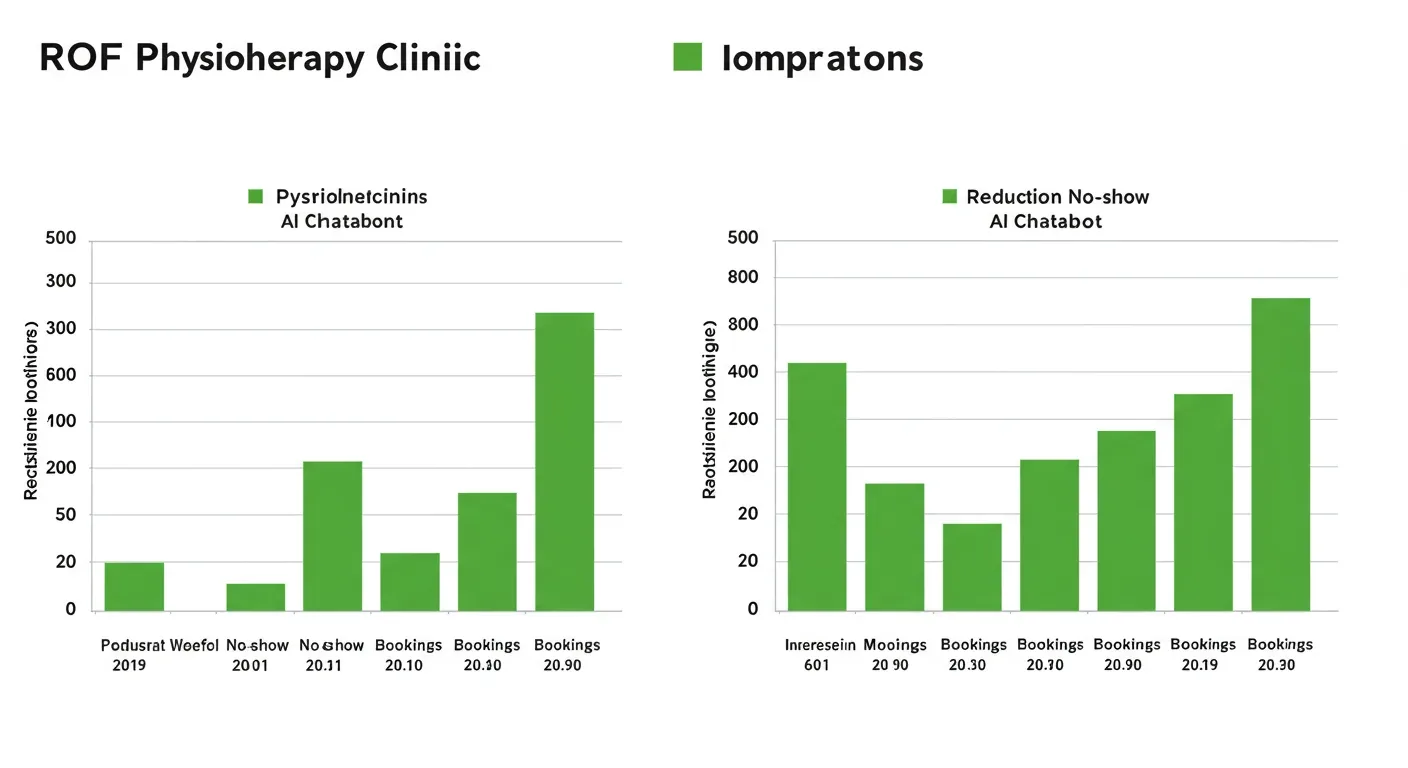
- No-show rate drops to 17–18% — recovers ₹12,000–₹15,000
- After-hours bookings recovered: 8–10 — ₹6,400–₹8,000
- Reception time on repeat queries: 4 hours/week saved
- Package completion: 75% (exercise reminders + adherence tracking)
- Platform cost: ₹3,999/month
- Net month-1 ROI: 4x to 5x platform cost
By month 3 (compounding)
- Online review volume up 60% (post-session review requests)
- Returning patient rate up 22% (drip recall campaigns)
- Practo / JustDial enquiry-to-booking conversion up 35%
- New patient acquisition cost down 40%
- Compounded ROI: 8x to 12x platform cost by month 3
The biggest single win is usually after-hours capture. Industry data show 30–40% of new patient enquiries arrive between 7pm and 9am. Without a chatbot, those enquiries either get a missed call or go to a competitor whose chatbot replied first.
10-step setup guide
This is the order we recommend for a physio clinic going from zero to a fully working chatbot in 3–4 days.
Step 1: Map your clinic's top 20 patient questions
Audit your last 30 days of phone calls and WhatsApp messages. Group repeating questions: timings, fees, conditions treated, parking, insurance, payment options. This is the seed for your RAG knowledge base.
Step 2: Connect your clinic management system
Sync Practo Ray, Cliniko, or Halaxy. The bot reads availability and writes bookings back. If you are on a custom EMR, AIChatBot's open API supports custom integrations — talk to support.
Step 3: Define multi-therapist routing rules
List each therapist and their specialisations. Set rules: knee, ankle, sports → therapist A; stroke, neuro → therapist B; paediatric → therapist C. Add fallbacks for when the first choice is fully booked.
Step 4: Configure exercise plan reminder templates
Build the 5–10 most common plans (frozen shoulder, ACL post-op, lower back pain, plantar fasciitis, post-stroke). Each template defines morning and evening reminders with video links. Therapists assign templates after the assessment.
Step 5: Set up multilingual replies
Enable the languages your patient base actually uses. For most Indian clinics that is English + Hindi + 1–2 regional languages. The bot detects from the first message and continues in that language.
Step 6: Add the digital intake form
Set up the chat-based intake: pain location, scale, prior surgeries, current medications, red-flag screening. Patients fill it before they arrive. Therapists see it in the dashboard.
Step 7: Connect WhatsApp Business
Link your verified WhatsApp Business number. All reminders, exercise videos, and payment links flow through WhatsApp going forward. Read our WhatsApp chatbot setup guide for the full process.
Step 8: Wire up reminders and no-show recovery
Standard cadence: 24h SMS, 2h WhatsApp, post-no-show same-day recovery. The recovery message is non-judgemental — "hi, we missed you today, would you like to reschedule for Wednesday?" Wins back 30–40% of missed sessions.
Step 9: Embed the widget on your clinic site
Paste the AIChatBot script tag once. The widget loads on every page including the booking page, contact page, and home page. See our chatbot training guide for what to feed it first.
Step 10: Test, measure, iterate weekly
For the first 4 weeks, review the dashboard weekly. Track: bookings made by bot, no-show rate, exercise plan adherence, average response time, language breakdown. Tune the scripts based on what patients actually ask.
Mistakes physio clinics make with chatbots
The patterns below are the ones we see kill chatbot ROI in the first 60 days. All of them are preventable.
Setting it up and forgetting it
The first month needs weekly tuning. Patients ask things you did not anticipate. Skipping the review means the bot stays mediocre forever. Treat the first 4 weeks as setup, not autopilot.
Over-promising clinical advice
Some clinics try to make the bot answer "is my back pain serious" type questions. Do not. The bot triages and books — it does not diagnose. Crossing that line creates legal exposure under IAP guidance.
Skipping the multilingual setup
If your patients are 40% Marathi or 30% Tamil, an English-only bot will lose them. Multilingual is a 5-minute setup that doubles engagement in tier 2 and tier 3 cities.
Not connecting WhatsApp
An on-site widget alone catches 30–40% of patient interactions. Add WhatsApp and you catch 90%+. Indian patients live on WhatsApp; meeting them there is non-negotiable.
Generic exercise reminders instead of plan-specific
"Did you do your exercises today?" generic prompts have low engagement. "Time for your 3 sets of glute bridges and side-leg raises" with a video link has 3x the engagement. Build templates per plan.
Ignoring the post-no-show recovery sequence
Most clinics set up the pre-appointment reminder and stop there. The post-no-show recovery message recovers 30–40% of missed sessions. Skipping it leaves money on the table.
Choosing a generic chatbot over a healthcare-tuned one
Tools like Tawk.to or Tidio are built for e-commerce. They do not understand multi-therapist routing, IAP triage rules, or DPDP consent flows. Always pick a chatbot tuned for healthcare service businesses.
Three real-world case snapshots
Names changed for privacy. Numbers are from AIChatBot's internal physio installation data.
Pune ortho-rehab clinic, 4 therapists
Started at 28% no-show rate, English-only reception. After 60 days on AIChatBot: no-shows dropped to 17%, after-hours bookings up 41% (mostly Marathi WhatsApp messages between 9pm and midnight), reception time on repeat queries down from 18 hrs/week to 5. Net: ₹62,000 more revenue per month, ₹3,999 platform cost.
Solo physio in Bengaluru, neuro specialisation
Single therapist, hospital-affiliated. Pain points: post-stroke patients with caregivers messaging at odd hours, exercise plan adherence collapsing by week 3. After 90 days: caregiver WhatsApp engagement up 6x, exercise plan adherence rose from 38% to 72% (videos sent on WhatsApp), referrals from caregivers up 24%. Net: 4 new neuro-rehab packages per month directly attributable to chatbot.
Multi-branch physio chain, 3 locations in Mumbai
Pain points: branch routing confusion, package completion below 60%. After 4 months: branch routing was solved by location-aware booking (bot offers nearest branch first), package completion rose from 58% to 76% (drip campaign re-engaged dormant packages), Practo and JustDial conversions up 38%. Net: ₹2.4 lakh additional monthly revenue across the three branches.
Frequently asked questions
Is an AI chatbot for physiotherapy safe under DPDP and IAP guidelines?
Yes, when configured correctly. AIChatBot stores patient data on India-resident servers, supports DPDP Act 2023 consent prompts before any health data is captured, and lets you set retention windows on chat transcripts. The bot follows IAP (Indian Association of Physiotherapists) guidance — it triages and books, but does not diagnose or prescribe exercise plans without a registered physiotherapist's review. Red-flag symptoms always escalate to a human therapist before any advice is given.
How much does an AI chatbot for physiotherapy cost in India?
AIChatBot pricing for physio clinics starts at around ₹1,999 per month for solo practitioners and ₹3,999 per month for multi-therapist clinics, billed via Razorpay with GST invoicing. Most clinics recover the cost within the first month from no-show reduction alone — at ₹600–1,200 per session, recovering 4–6 missed appointments pays the platform. There is no free trial; the conversion path is a personalised demo website built for your clinic.
Can the chatbot handle multi-therapist scheduling and condition-based routing?
Yes. You can configure routing rules so musculoskeletal cases go to one therapist, neuro-rehab to another, paediatric to a third. The bot reads therapist availability from your clinic management system, applies the routing rule, and offers the patient suitable slots. If your top therapist is fully booked, the bot offers the next available slot with another qualified therapist instead of losing the lead.
How does the chatbot improve exercise plan adherence between sessions?
Research shows 65% of patients are nonadherent or partially adherent to home exercise programmes, and adherence drops sharply when plans exceed 5–8 exercises. AIChatBot sends WhatsApp reminders timed to the patient's plan — morning sets, evening sets, and a daily check-in. The patient replies with a simple emoji or rating. Therapists see compliance scores in their dashboard and can adjust the plan or call patients who fall behind.
Will it support Hindi and regional Indian languages?
Yes. AIChatBot supports 50+ languages including Hindi, Marathi, Tamil, Telugu, Kannada, Bengali, Gujarati, Punjabi, and Malayalam. The bot detects the patient's language from the first message and continues in that language for the rest of the conversation. Exercise reminder videos and intake forms can also be served in the patient's preferred language, which matters for older patients in tier 2 and tier 3 cities.
What does the realistic ROI look like in month 1 for a physio clinic?
A typical 3-therapist clinic in Pune or Bengaluru running 200 sessions per month sees: 25–35% no-show reduction (worth ₹15,000–₹25,000 in recovered revenue), 8–12 new bookings from after-hours WhatsApp messages (worth ₹6,000–₹12,000), and 3–4 hours per week saved at reception. Net month-1 ROI is usually 4x to 8x platform cost. After-hours capture is often the biggest win — 30–40% of new patient enquiries arrive between 7pm and 9am.
Ready to see this in your clinic?
Most physio clinic owners do not want a generic free trial — they want to see what the bot will look like with their own branding, fees, and treatment list before they commit. That is what the personalised demo does.
We build a one-off demo website mocked up with your clinic's name, services, and an actual working chatbot trained on your data. You see exactly how it will feel for your patients before you sign up. Get yours at Get My Free Demo.
Related reading
- AI chatbots transforming customer support in 2026
- WhatsApp chatbot setup guide for Indian businesses
- AI chatbot pricing guide 2026
- AI chatbot for physiotherapists in India
- How to train your AI chatbot on your clinic knowledge base
- AI chatbot for doctors and medical practices
- AI chatbot for dental clinics
See it working on your website
AIChatBot is built specifically for businesses like yours
We build a personalised demo on your actual website — trained on your real content. Free, no commitment.
See how it works for ClinicsReady to add an AI chatbot to your website?
We build a personalised demo on your actual website — free, no card needed.
See it live on your website — free demo
We build a personalised demo on your actual website so you can see exactly how it works before you pay a rupee.
No setup fee until you're happy · Pay via UPI · Razorpay · Cards